AFC Strategic Asset Allocation
During a recent portfolio review, a long-standing client raised a concern that many investors share - particularly following a strong year for equity markets.
They pointed to the fixed income allocation in their portfolio and said:
“These funds have underperformed equities this year. Why are we holding them if they’re not performing?”
It’s a fair question. But comparing fixed income to equities over short periods misses a critical point about how portfolios are designed - particularly for US persons living in the UK, where tax and reporting considerations are just as important as performance.
Strategic Asset Allocation vs Short-Term Performance
Strategic asset allocation involves structuring a portfolio across asset classes, such as equities, fixed income, and alternatives, based on long-term objectives, risk tolerance, and time horizon.
It does not assume that all asset classes will outperform simultaneously.
Equities are growth assets, designed to compound capital over time
Fixed income is a defensive allocation, intended to reduce volatility, generate income, and preserve capital during periods of market stress
When equities perform strongly, fixed income often lags. This relative underperformance is not a failure - it is an expected outcome of diversification.
Why Fixed Income Often Lags Equities in Strong Market Years
In risk-on environments, capital typically flows toward equities, particularly growth-oriented assets. Fixed income returns can appear subdued by comparison, especially when interest rate expectations are stable or rising.
For US and UK investors, fixed income returns may also be influenced by:
Central bank policy (Federal Reserve and Bank of England)
Inflation expectations
Yield curve dynamics
Currency exposure within global bond portfolios
These factors affect short-term returns, but they do not change the risk management role fixed income plays within a diversified portfolio.
Risk Management, Not Return Maximisation
Fixed income is not included in portfolios to outperform equities in strong years. It is held to:
Reduce overall portfolio volatility
Limit drawdowns during equity market corrections
Provide predictable income streams
Maintain liquidity during periods of financial stress
Its value is often most evident when equity markets experience sharp repricing, not when markets are calm.
An Additional Layer for US Persons in the UK: Fund Structure Matters
For US citizens and other US persons resident in the UK, portfolio construction involves an additional layer of complexity.
Using the wrong type of investment fund can significantly erode after-tax returns, regardless of underlying performance.
In particular, US persons in the UK generally need to ensure that:
Funds are US-domiciled (to avoid UK Offshore Fund / PFIC issues), and
Those funds have UK reporting fund status to ensure UK capital gains tax treatment
Failure to use US funds with UK reporting status can result in:
Punitive US PFIC taxation
UK income tax treatment on gains rather than capital gains
Increased reporting complexity and compliance risk
This means that decisions around fixed income allocations are not just about asset class selection, but also about fund structure, domicile, and tax efficiency across both jurisdictions.
In some cases, a fixed income fund that appears to “underperform” on a headline return basis may still be the most appropriate option once tax treatment, reporting status, and risk characteristics are properly considered.
A Portfolio Construction Analogy
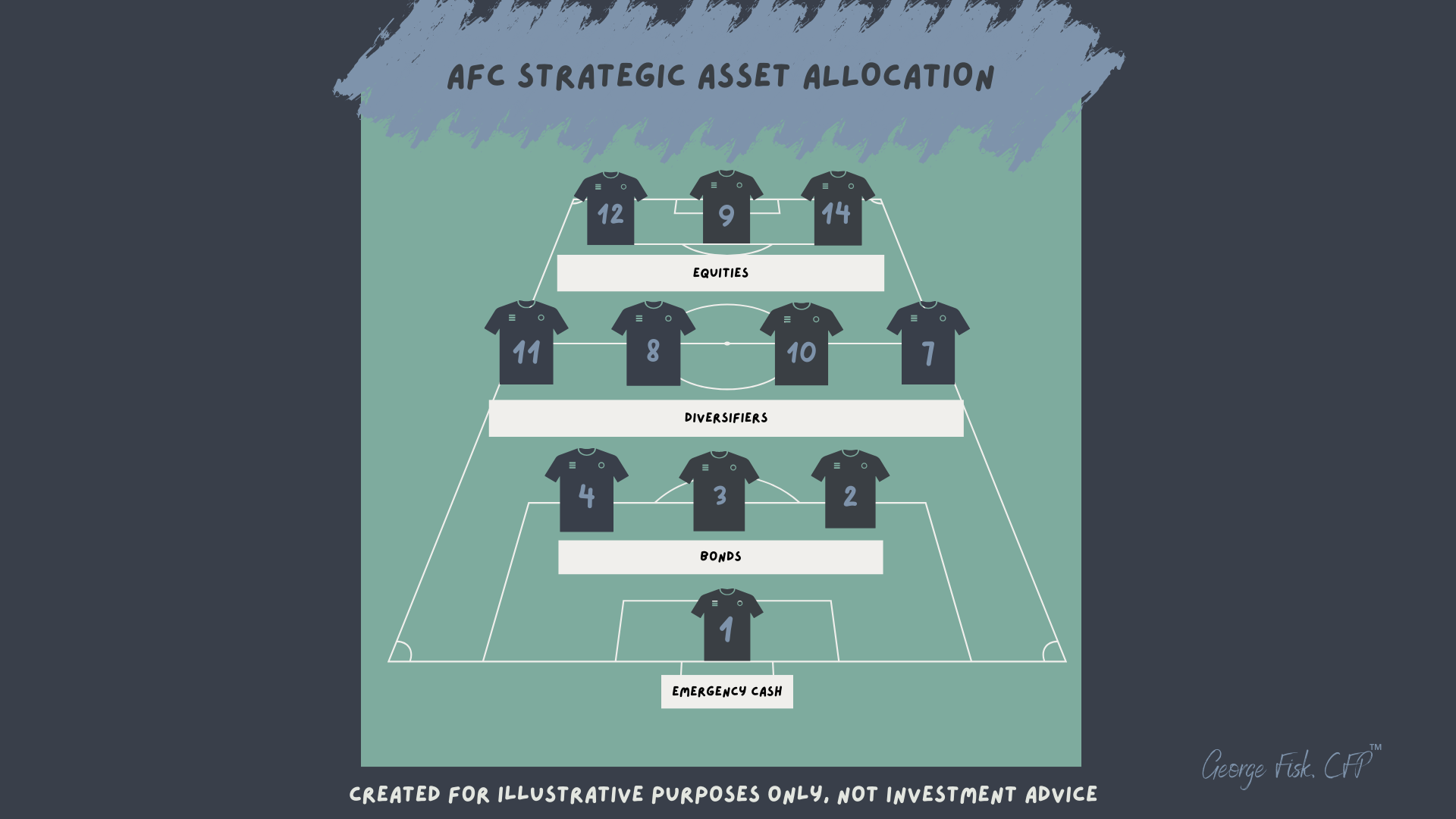
I often explain this using a football analogy.
When a team’s forwards are scoring freely, defenders tend to go unnoticed. But no successful team would remove its defenders simply because they are not scoring goals.
Their role is to absorb pressure, protect the downside, and keep the team competitive when momentum shifts.
Portfolios work the same way. Different assets, and different fund structures, add value at different times.
🏆 Trophies aren’t won by attackers alone - they’re won by teams that defend well when the pressure’s on.
The Long-Term View for Cross-Border Investors
For US persons living in the UK, long-term investment success is rarely driven by chasing recent winners. It is driven by:
Disciplined strategic asset allocation
Appropriate risk management
Careful fund selection aligned with both US and UK tax regimes
A clear understanding of each investment’s role within the portfolio
Short-term underperformance does not necessarily indicate poor investment design. Often, it reflects that an asset, or fund structure, is doing exactly what it was intended to do.
